Test decisions under alternative futures, not only against today’s conditions.
The Scenario Analysis Tool helps teams work with active signals, structured scenario flows, and reportable outputs so they can prepare better decisions under uncertainty.
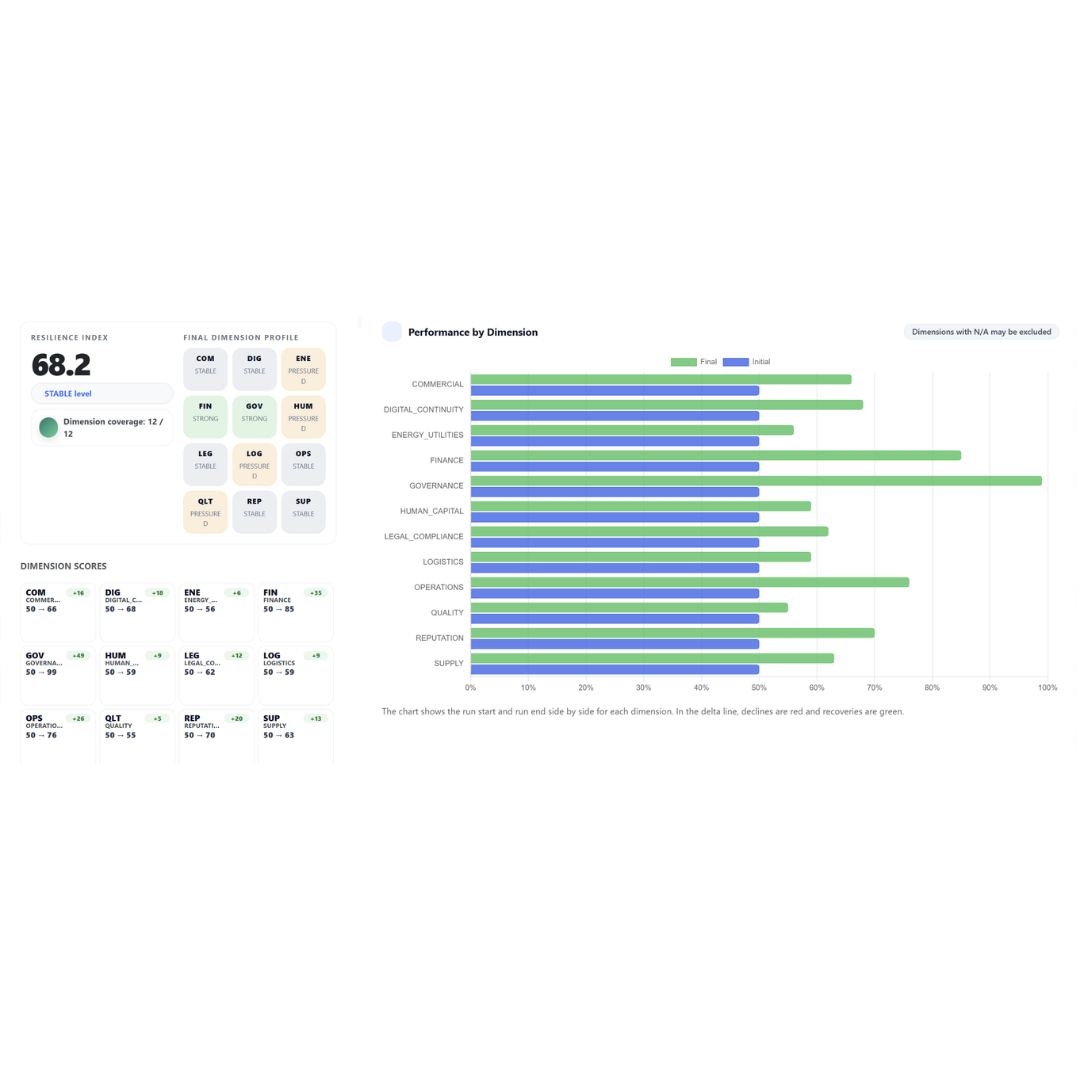
It strengthens decision quality under uncertainty
The tool is designed to help teams understand how different future conditions may affect decisions, how active signals should be interpreted, and how alternative paths compare.
-
Active signal tracking
Makes early indicators and trigger conditions visible so teams can connect them to the decision flow.
-
Scenario flow design
Allows alternative decision paths to be tested inside a structured and repeatable working model.
-
Comparative outcomes
Helps teams place different future assumptions side by side and discuss implications more clearly.
-
Reporting and reuse
Turns scenario work into an output that can be shared, reviewed later, and used again.
Outputs that make scenario logic visible and usable
Scenario work does not stay as an abstract exercise. EENTOOLS turns it into a workflow with signal tracking, output comparison, and report structure.
Decision simulation
Shows how the same decision may lead to different outcomes under different future conditions.
Signal visibility
Highlights which external indicators matter more and what they might trigger.
Report-ready output
Produces readable scenario reports that can support management or project review.
Repeatable process
Provides a scenario workflow that can be reused and built into institutional practice.
Scenario workflows reworked for the EENTOOLS interface
The scenario landing structure is preserved in substance, but rebuilt here as a more cohesive EENTOOLS landing with amber accents and dark/light compatibility.
Scenario view 1
Shows the first scenario screen prepared for the EENTOOLS landing.
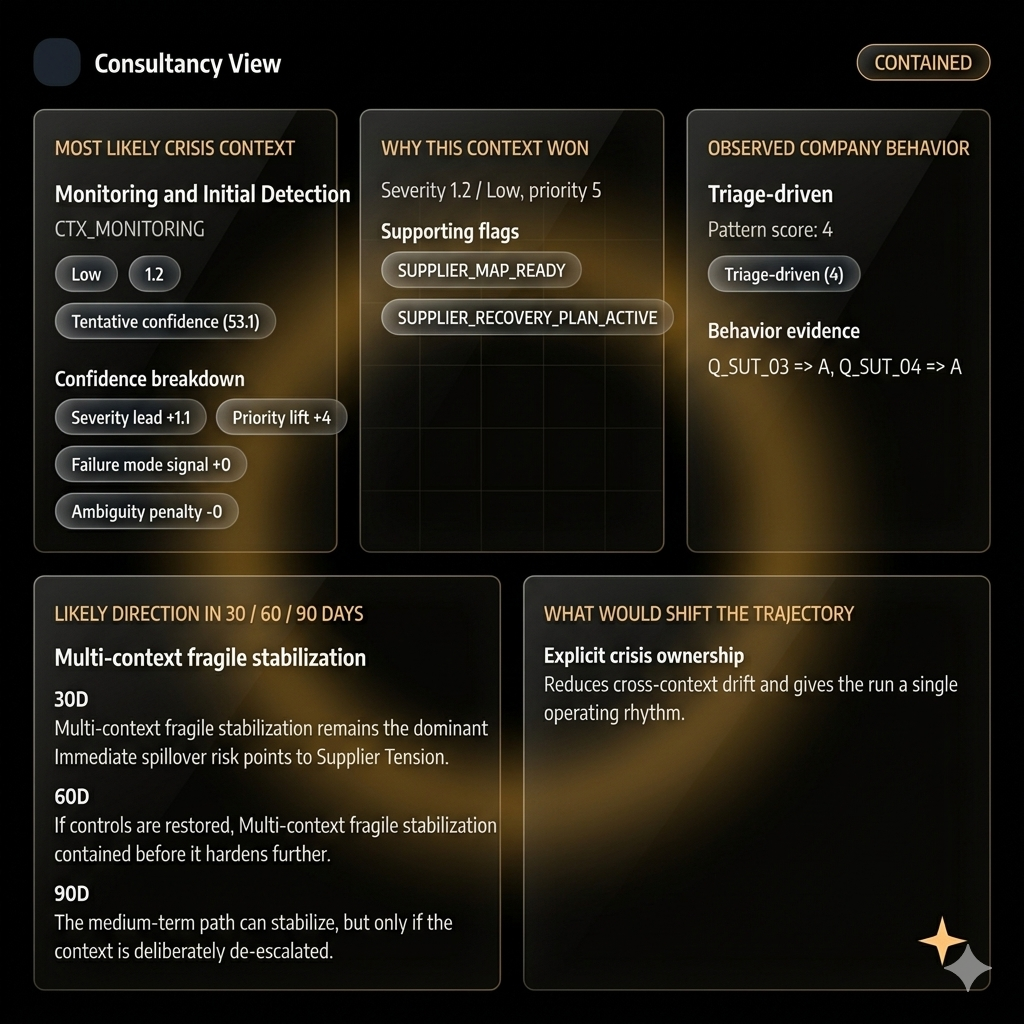
Scenario view 2
Shows the second scenario screen prepared for the EENTOOLS landing.
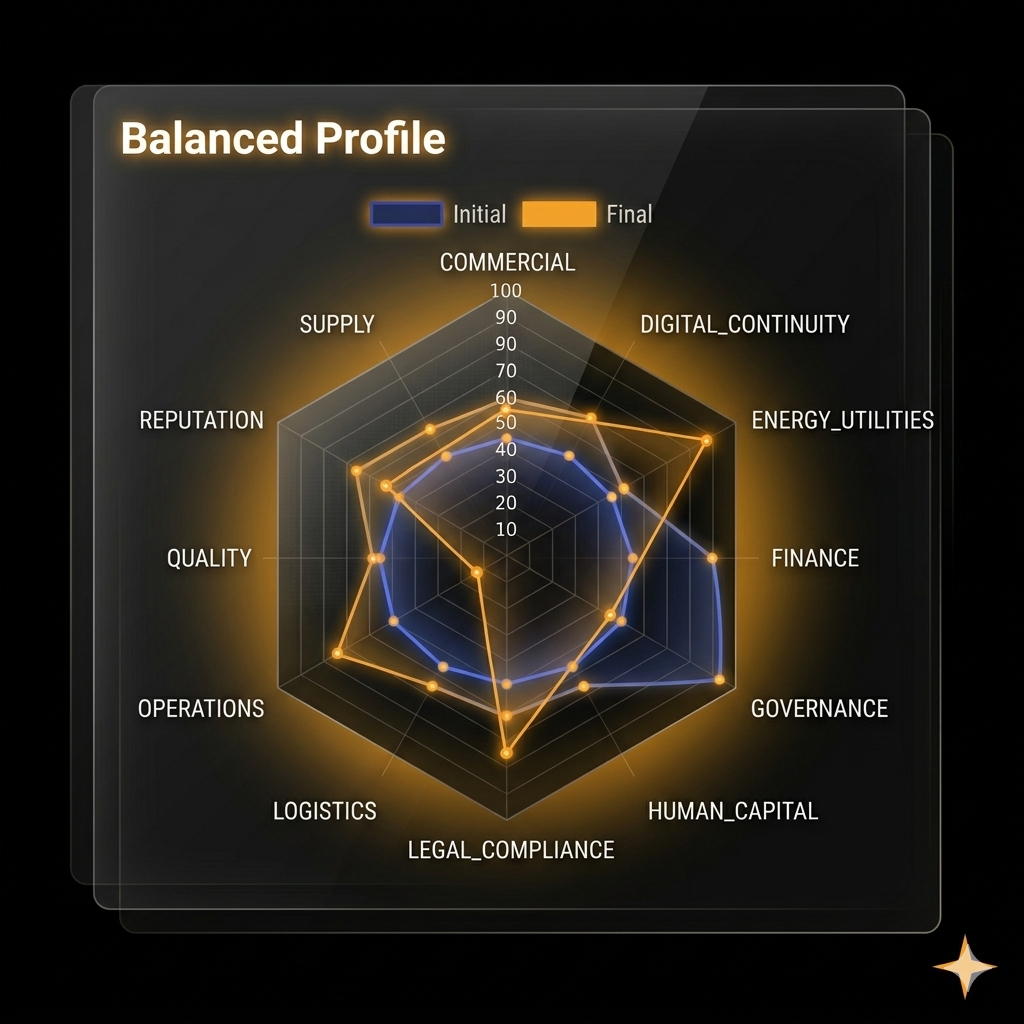
Track the signal, run the flow, report the result
The platform covers the whole path from scenario initiation to reporting, making alternative futures easier to handle in a repeatable way.
1. Define the signal and context
Identify the external signals, assumptions, and trigger conditions that matter for the decision.
2. Run the scenario flow
Test alternative paths and implications through the structured scenario workspace.
3. Report and reuse the outcome
Share what was learned across the team and make future decision preparation more systematic.
Built for teams preparing decisions under uncertainty
Leadership teams, project leads, and support organizations can use the tool to bring more structure to difficult decisions in shifting external environments.
-
Leadership and strategy teams
Useful for decision-makers testing investments, operations, or adaptation choices under uncertainty.
-
Project and program leaders
Helps teams compare possible outcomes before committing to execution.
-
Advisors and support organizations
Suitable for professionals assessing readiness under alternative futures in a more structured way.
Common questions
Integrate scenario work with the rest of the platform
Scenario Analysis becomes more useful when it is read next to resilience, RECAP, and sustainability results.
Test alternative futures more systematically
Track active signals, compare decision paths, and share the result in a format that teams can review again later.